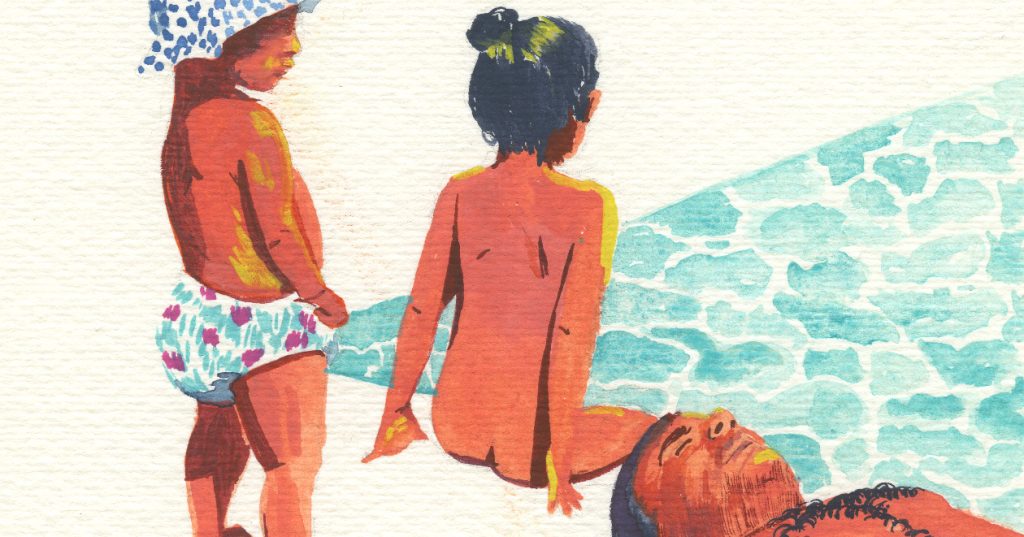
The Shape of Water — What I Learned from David Hockney
David Hockney died this month, and unlike many artists whose work you remember only when you hear the news, I thought about him often — all the time. It is a strange kind of mourning to look for his fingerprints on your own hands.
He taught me three things. The first is stillness — not the stillness of nothing happening, but the stillness that comes from applying enormous patience to sudden movement. In A Bigger Splash (1967), a body has just entered the water. The surface is exploding, yet the painting is the calmest object in the world. He spent two weeks getting the splash right. A splash that lasted half a second.
The second thing he taught me is that what you love is the only subject. Hockney spent sixty years insisting that his friends, his lovers, his garden, and the road outside his house were sufficient. He never went looking for the grand subject because he never believed there was one.
The third is joy. He was often accused of being a decorator who painted pretty pictures for rich people with pools. The criticism never touched him, because he had figured out, early and permanently, that pleasure is not a lesser thing.
In his memory, I painted him sitting in a pool in his tweeds, flat cap and round yellow glasses, feet in the water, working at an easel in the shallow end. Smiling, of course. It is the only way I can imagine him.
Read the full essay and see the gouache paintings on Substack →
 previous post